

Goal Setting · Habit Tracking
How to Restart a Habit Without a Heroic Comeback
A missed streak does not need a heroic comeback. In fact, the best restart is usually the most boring one on purpose. That may sound unglamorous, but it is often the most effective way to protect...
A missed streak does not need a heroic comeback. In fact, the best restart is usually the most boring one on purpose. That may sound unglamorous, but it is often the most effective way to protect consistency when motivation is low and life is already full.
At Goalmate24, we believe consistency is built less by dramatic resets and more by small, repeatable returns. When a workout is skipped, a writing day is missed, or a habit slips for a day, the aim is not to create a bigger plan. The aim is to reduce friction and make the next action easy enough to do.
Step 1: Name the miss without building a story
The first move is simple: say what happened without turning it into a narrative about failure. A missed day is a missed day. It does not need extra meaning attached to it. The more we turn a slip into a story, the more energy we spend processing it instead of restarting it.
This matters because momentum is fragile. When momentum is already low, emotional weight can make the next step feel heavier than it really is. A clear, neutral acknowledgment keeps the restart practical. It helps us move from reaction to action.
Step 2: Choose the smallest version that still counts
After that, the best next step is the smallest version of the habit that still counts. Not the full catch-up session. Not the upgraded plan. Just the minimum version that keeps the habit alive.
For example, after a missed writing day, the restart might be one paragraph at the same time tomorrow. That is enough to re-enter the rhythm without demanding a big emotional or logistical lift. Small restarts work because they lower resistance. They make it easier to begin again before hesitation grows.
If consistency is the goal, then the restart should be designed for low friction, not high ambition. That is one reason our approach at Goalmate24 focuses on building habits that are easier to return to, not just easier to start.
Step 3: Put the restart on the calendar
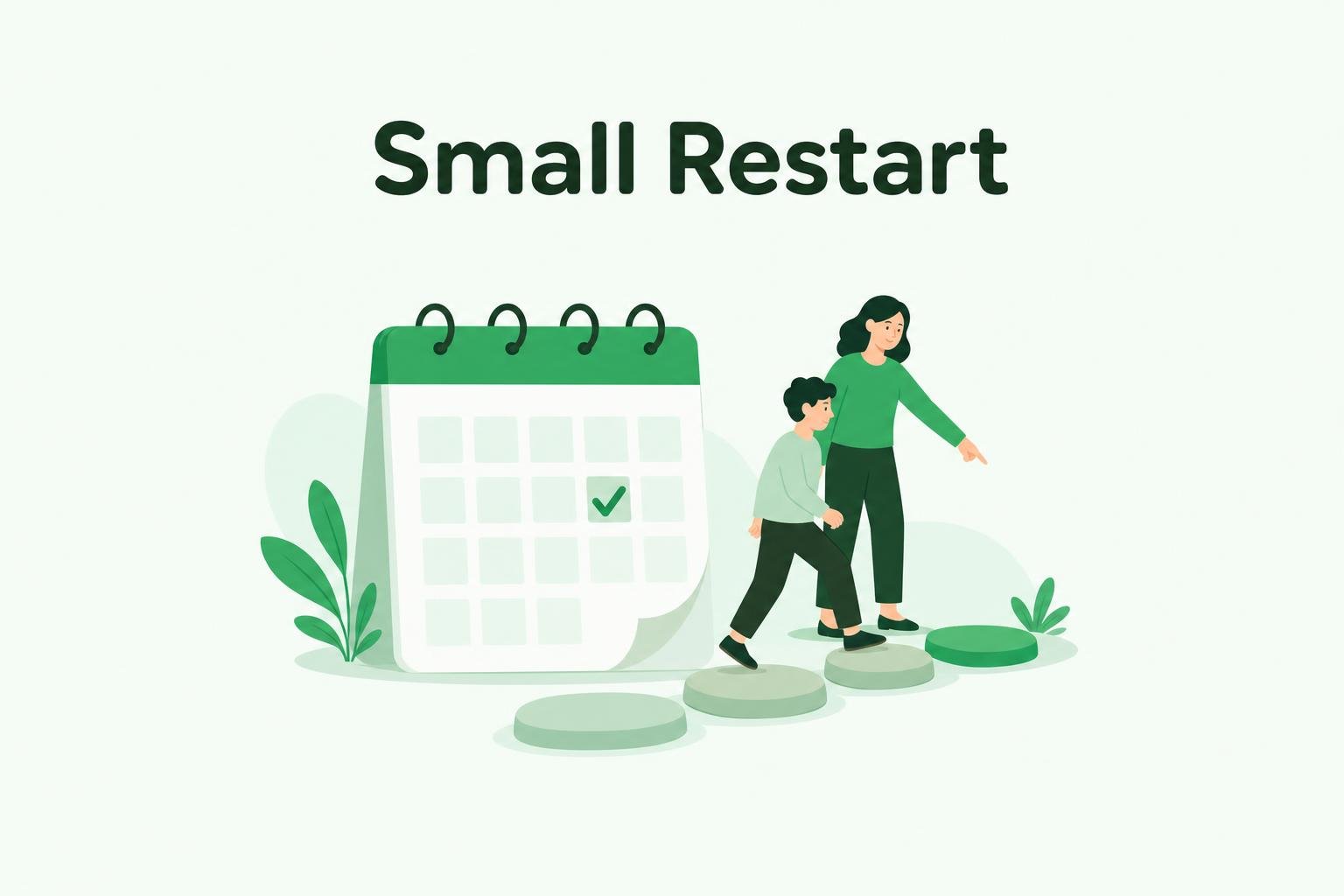
The final step is to schedule the tiny restart before the day gets crowded. A good intention can disappear quickly once meetings, errands, and distractions fill the calendar. When the restart is placed in advance, it stops being a vague promise and becomes a concrete commitment.
This order matters. If we try to fix a miss with a bigger plan, we often add friction right when momentum is already low. A small restart, scheduled early, protects us from overcomplicating the return. It creates a clean path back into the habit.
The goal is not to erase the gap. The goal is to return before the gap starts to feel normal. That is a powerful distinction. A gap becomes more difficult to close when it turns into a pattern. A quick, simple restart helps prevent that from happening.
Consistency is built by returning, not by being perfect
Habit-building is not about never missing. It is about knowing how to restart without drama. The less we ask of ourselves at the moment of return, the more likely we are to return at all.
So the next time a streak breaks, we can keep it boring: acknowledge the miss, choose the smallest valid step, and schedule it before the day gets crowded. That is how consistency gets rebuilt one small return at a time.
If we want support making that return easier, we can also build with tools that help us stay on track. Explore more at Goalmate24.