

Goal Setting · Habit Tracking
Why Better Accountability Check-Ins Improve Consistency
An accountability partner is most useful when the check-in goes beyond a casual “How is it going?” A vague question can feel supportive, but it often leaves the most important part untouched: what...
An accountability partner is most useful when the check-in goes beyond a casual “How is it going?” A vague question can feel supportive, but it often leaves the most important part untouched: what was actually promised, what happened, and what should happen next.
At Goalmate24, we believe accountability works best when it is structured enough to be useful and simple enough to repeat. That is why a stronger check-in focuses on the exact action that was agreed on. When the conversation starts with the specific plan, it becomes much easier to review progress honestly and without confusion.
Why Specific Accountability Works Better
A broad check-in can blur the difference between effort and follow-through. Specific accountability makes the conversation clearer because it turns a vague promise into something measurable. Instead of asking whether someone feels productive, we ask whether the exact action happened.
This matters because a missed action does not have to become a missed week. When the block is named, the plan can be adjusted. The goal is not to restart from zero. The goal is to keep moving with a better next step.
That is one reason consistent accountability can feel so effective: it reduces the emotional weight of a miss. A missed action becomes information, not failure. With that shift, progress becomes easier to sustain over time.
A Simple Weekly Rhythm That Supports Consistency
A steady rhythm is often more powerful than a complicated system. A simple weekly structure can keep accountability practical and realistic:
Pick one goal. Keeping the focus narrow makes it easier to stay committed.
Agree on one check-in day. A fixed day creates a predictable routine.
Share the action, not just the outcome. The process matters, not only the result.
Report progress in one sentence. Short updates keep the check-in clear and easy to maintain.
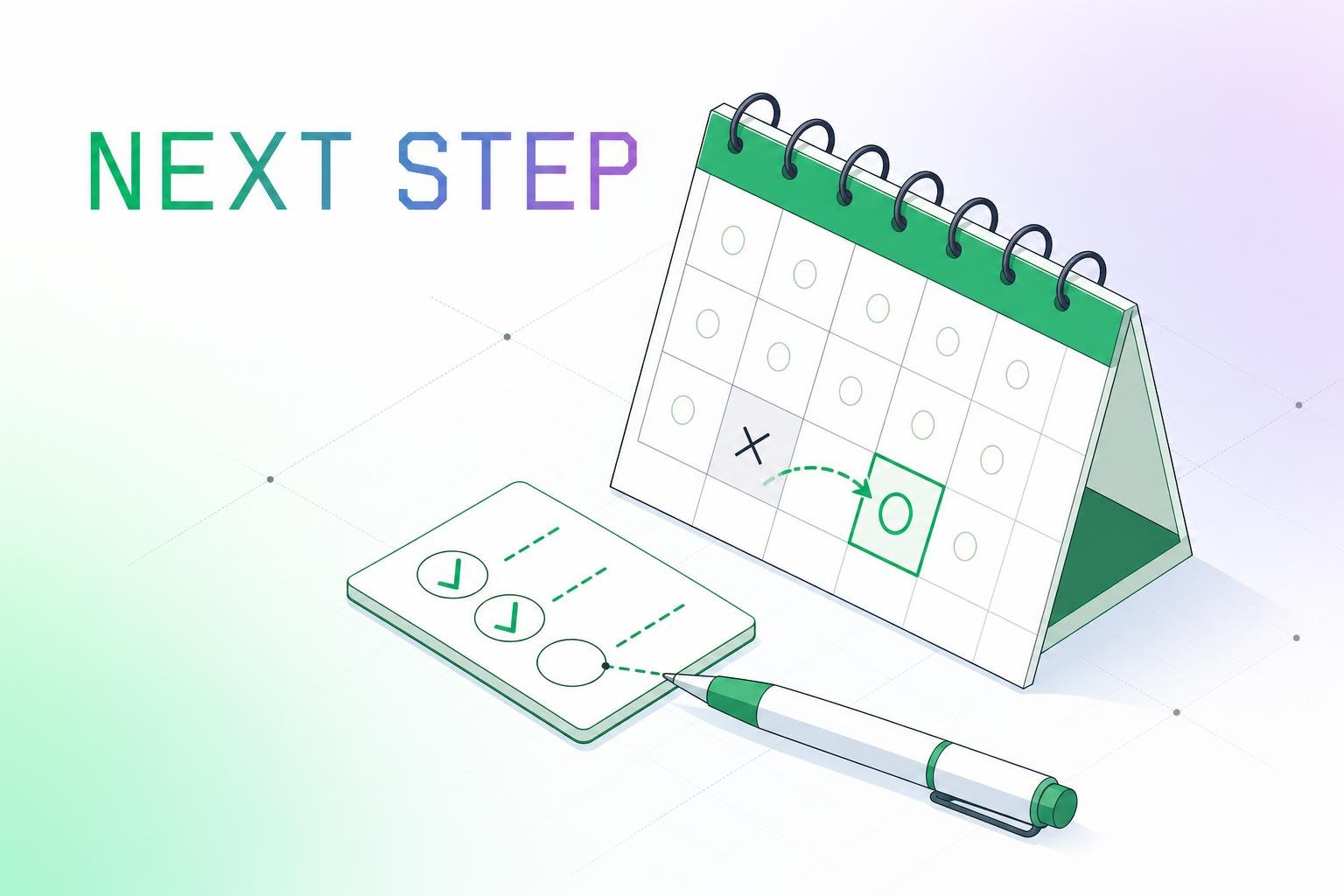
End with the next step. Every conversation should point forward.
This rhythm works because it removes extra friction. It does not require a long conversation or a complicated system. It simply creates a repeatable structure that keeps the goal visible.
How Misses Become Part of the Process
Everyone misses sometimes. The difference is what happens after the miss. A useful accountability check-in asks what got in the way and what the next smallest step should be. That keeps the focus on progress rather than perfection.
When the next step is small, it is easier to begin again. That is especially important for ambitious people who set high standards but struggle to stay consistent. A smaller step is not a weaker plan. It is often the most practical way to restore momentum.
At Goalmate24, we build for that kind of steady follow-through. Our approach is designed to support the kind of accountability that keeps people moving, even when motivation dips or life gets busy.
Build a System That Makes Follow-Through Easier
Consistency rarely comes from trying harder alone. It comes from having a system that makes the right action easier to review, easier to adjust, and easier to repeat. That is what better accountability check-ins provide.
If the goal is to stay consistent, the question should not stop at “How is it going?” It should move toward the action, the block, and the next step. That is where real progress lives.
For anyone who wants a more reliable way to stay on track, Goalmate24 is built to support that steady rhythm of accountability, one check-in at a time.